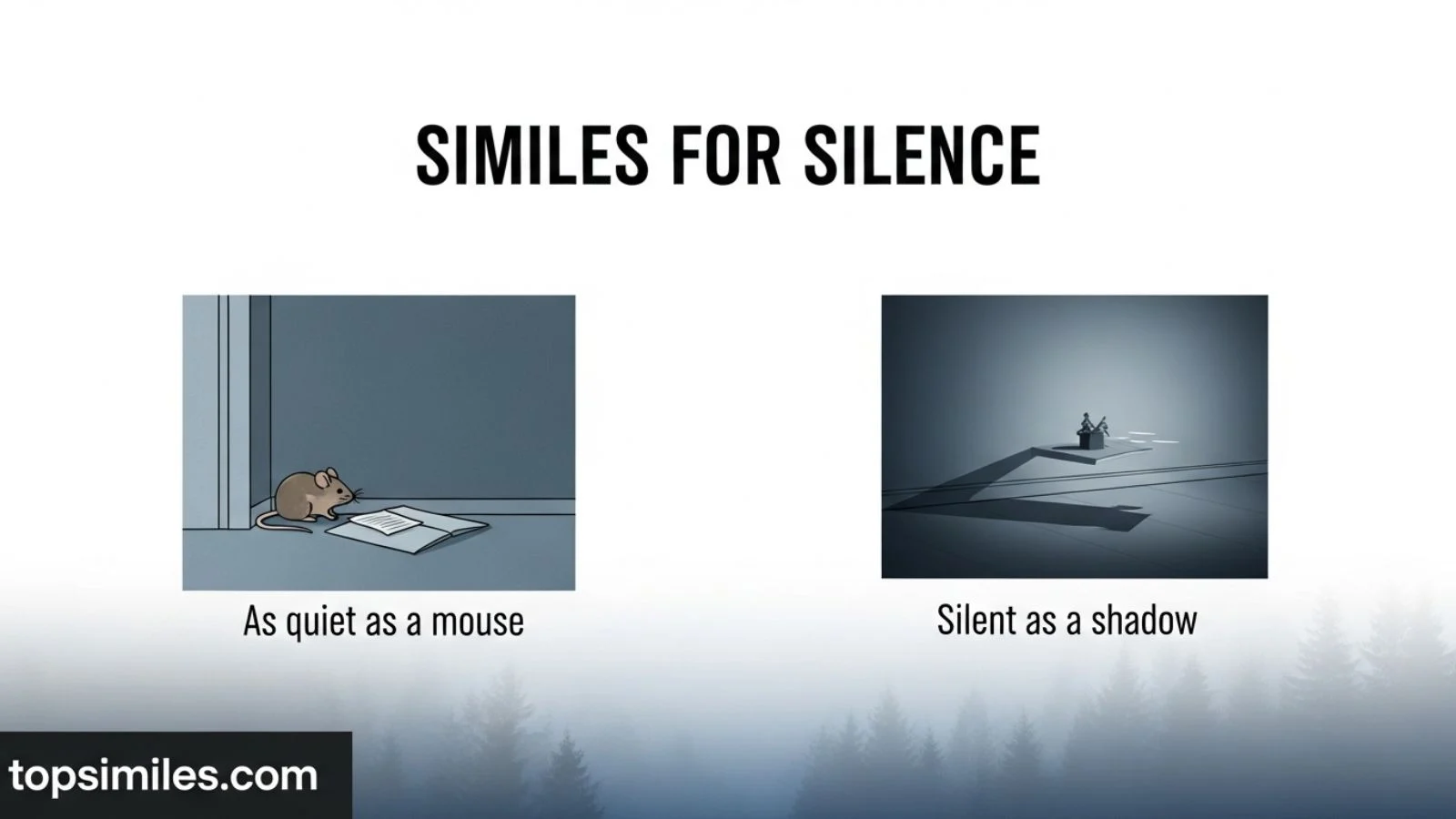
Silence can feel peaceful, tense, or even heavy. Writers use similes for silence to help readers experience quiet moments, not just read about them.
A simile is a comparison using like or as. For example, “The room was as silent as a graveyard” instantly paints a picture. Similes make your writing richer, showing mood, atmosphere, and emotion without overexplaining.
In this guide, we’ll explore beginner-friendly examples of similes, their meanings, and how to use them in your own writing. Think of it as a friendly chat about making your scenes more vivid.
120+ Similes for Silence
“The room fell silent like someone pressed a mute button.”
Meaning: Sudden silence.
Explanation: Compares quiet to turning off sound.
Examples: When the principal entered, the class went silent like someone pressed a mute button. / His confession made the group silent, as if a mute button had been hit.
“The forest was as silent as a sleeping child.”
Meaning: Gentle, peaceful silence.
Explanation: Suggests calm and rest.
Examples: Early in the morning, the forest was as silent as a sleeping child. / The house felt warm and quiet, silent like a sleeping child.
“Her stare made the room quiet like a held breath.”
Meaning: Tense, waiting silence.
Explanation: Shows anticipation or fear.
Examples: The crowd went quiet like a held breath. / The moment before the winner was announced was silent like a held breath.
“The night was as silent as snow falling.”
Meaning: Soft, delicate silence.
Explanation: Snow creates calm and stillness.
Examples: The village was as silent as snow falling. / His mind finally felt as silent as falling snow.
“The hallway went quiet like a candle going out.”
Meaning: Sudden disappearance of sound.
Explanation: Soft but immediate silence.
Examples: When he walked in, the hallway went quiet like a candle going out. / Her words made the excitement fade, silent like a candle extinguished.
“The library was as silent as a sealed tomb.”
Meaning: Heavy, deep silence.
Explanation: Suggests seriousness or stillness.
Examples: The library was as silent as a sealed tomb. / His office after midnight felt silent like a tomb.
“The world outside felt quiet like a paused movie.”
Meaning: Still, frozen silence.
Explanation: Everything stops at once.
Examples: After the storm, the street felt quiet like a paused movie. / The moment she left, the house became silent like a paused film.
“Their silence sat between them like a wall.”
Meaning: Emotional distance.
Explanation: Silence shows tension or separation.
Examples: After the argument, silence stood between them like a wall. / The dinner was awkward, with silence like a wall.
“The room was as silent as midnight.”
Meaning: Deep nighttime quiet.
Explanation: Represents stillness or empty spaces.
Examples: The house after everyone left was as silent as midnight. / The classroom during exams was silent like midnight.
“The empty street was quiet like a forgotten place.”
Meaning: Lonely silence.
Explanation: Suggests abandonment.
Examples: The town early in winter was quiet like a forgotten place. / His old childhood home felt silent like something forgotten.
“Her voice faded, and silence spread like ink in water.”
Meaning: Silence growing slowly.
Explanation: Shows silence expanding naturally.
Examples: When the music stopped, silence spread like ink in water. / After his apology, silence filled the room like spreading ink.
“The church was as silent as a closed book.”
Meaning: Undisturbed, peaceful silence.
Explanation: Suggests rest and stillness.
Examples: The old chapel was as silent as a closed book. / Her room during exams was silent like a shut book.
“Their house at dawn was quiet like soft dust settling.”
Meaning: Gentle, unnoticed silence.
Explanation: Calmness and subtlety.
Examples: The morning was quiet like dust settling. / The room after the argument was silent like settling dust.
“The silence wrapped around them like a blanket.”
Meaning: Comforting silence.
Explanation: Suggests warmth or safety.
Examples: The cabin’s silence wrapped around them like a blanket. / After the long day, silence hugged her like a soft blanket.
“The garden was as silent as a forgotten dream.”
Meaning: Soft, faded silence.
Explanation: Stillness with mystery.
Examples: At dusk, the garden was as silent as a forgotten dream. / The room where she used to paint felt silent like a lost dream.
“The moment turned quiet like a whisper swallowed by the wind.”
Meaning: Silence overtaking sound.
Explanation: Sound disappears instantly.
Examples: His joke was swallowed by silence like a whisper in the wind. / The cheers faded, silent like a lost whisper.
“The hall stood silent as stone.”
Meaning: Hard, still silence.
Explanation: Nothing moves, nothing speaks.
Examples: The ancient hall was silent as stone. / His stare made the crowd silent like stone.
“The room fell quiet like dusk settling over a city.”
Meaning: Gradual, calm silence.
Explanation: Slowly becomes quiet.
Examples: The laughter ended, and silence settled like dusk. / The meeting ended, leaving the office silent like sunset.
“Her absence made the house quiet like an unfinished song.”
Meaning: Emotional, incomplete silence.
Explanation: Suggests longing or emptiness.
Examples: Without her, the home was quiet like an unfinished song. / The studio felt silent like music that never reached its end.
“The world around him grew silent like winter’s breath.”
Meaning: Cold, crisp silence.
Explanation: Stillness with a chill.
Examples: The night grew silent like winter’s breath. / His steps stopped, leaving the world quiet like cold air.
Practical Exercise Table
| # | Question | Answer | Explanation |
|---|---|---|---|
| 1 | Complete the simile: “The night was as silent as ___.” | midnight / a graveyard / a whisper | Any quiet image works |
| 2 | Is this a simile? “Silence wrapped around her like a blanket.” | Yes | It compares silence using like |
| 3 | Identify the comparison: “The class went quiet like a fading echo.” | Class → fading echo | Shows how quiet compares to fading echo |
| 4 | True or false: A simile must use like or as. | True | By definition, similes use like or as |
| 5 | Fill in the blank: “The beach at dawn was silent like ___.” | a forgotten place / soft dust / winter air | Any peaceful imagery works |
| 6 | Which shows tension? a) silent like a sleeping child b) silence like a held breath | b) | Held breath implies anticipation or fear |
| 7 | Rewrite using a simile: “The silence was deep.” | “The silence was deep like the bottom of the ocean.” | Enhances description with comparison |
| 8 | Find the simile: “The room felt peaceful, as calm as still water.” | as calm as still water | Direct comparison using as |
| 9 | What does “silent like stone” suggest? | Strength, stillness, no movement | Stone implies firmness and immobility |
| 10 | Which sense does a simile mostly improve—sight, sound, or taste? | Sound | Especially when describing silence or noise |
FAQs
Q1: What is a simile?
A: A simile is a comparison using like or as.
Q2: How do similes enhance writing?
A: They create vivid images and evoke emotions.
Q3: Can I use similes for emotions?
A: Yes, they can describe feelings like silence, fear, or joy.
Q4: Are similes only for poetry?
A: No, you can use them in stories, essays, or everyday writing.
Q5: How do I create a good simile?
A: Compare the subject to something familiar and vivid.
Conclusion
Similes make writing more vivid and engaging. Using comparisons for silence helps your readers feel the scene. Whether it’s calm, tense, or lonely, the right simile brings moments to life.
Notice quiet moments in daily life and describe them with comparisons. With practice, your writing will become more expressive, memorable, and creative.
Happy writing! ✍️

Frank J. Wilstach is a passionate language enthusiast and grammar writer at topsimiles, where he makes English usage and wordplay accessible and engaging.
With a knack for clear explanations and memorable examples, Frank helps readers master language, style, and expression with confidence.